
Last updated November 22, 2026
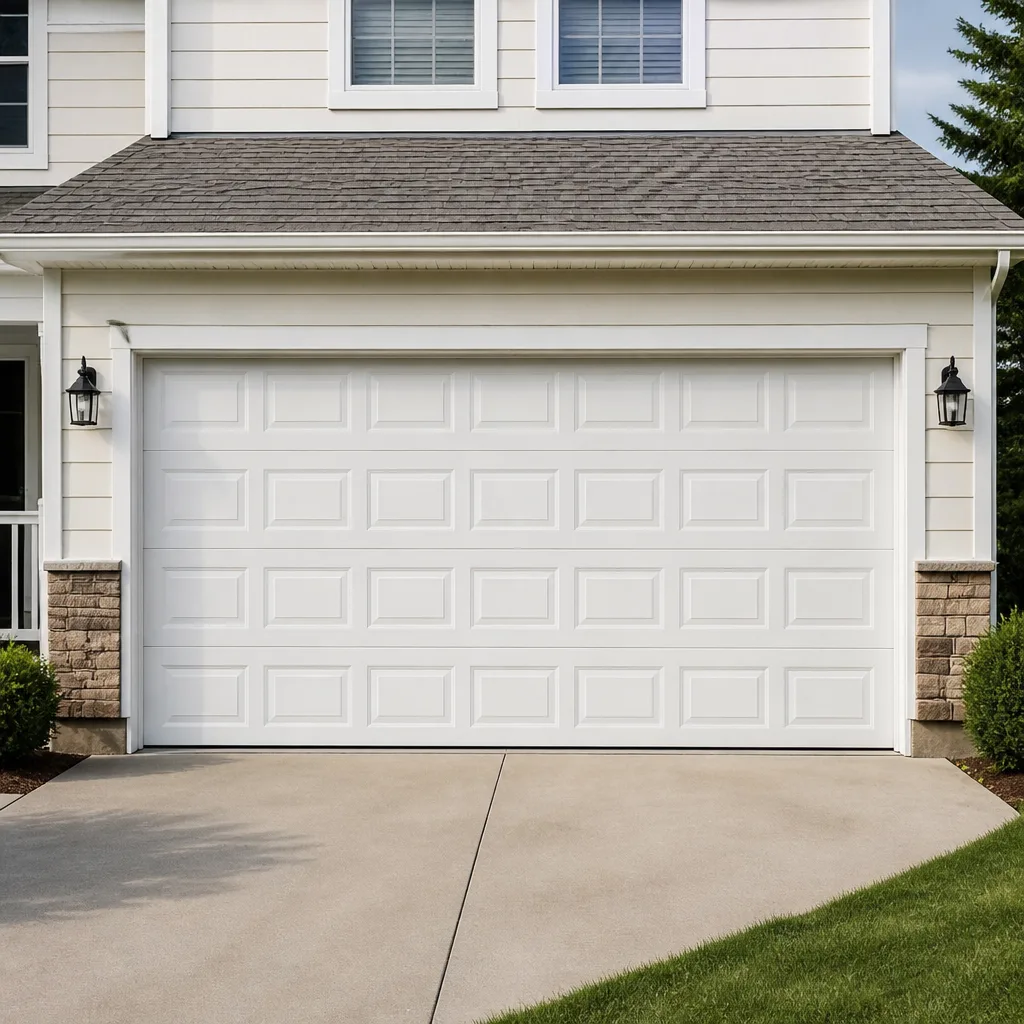 Raised-panel steel
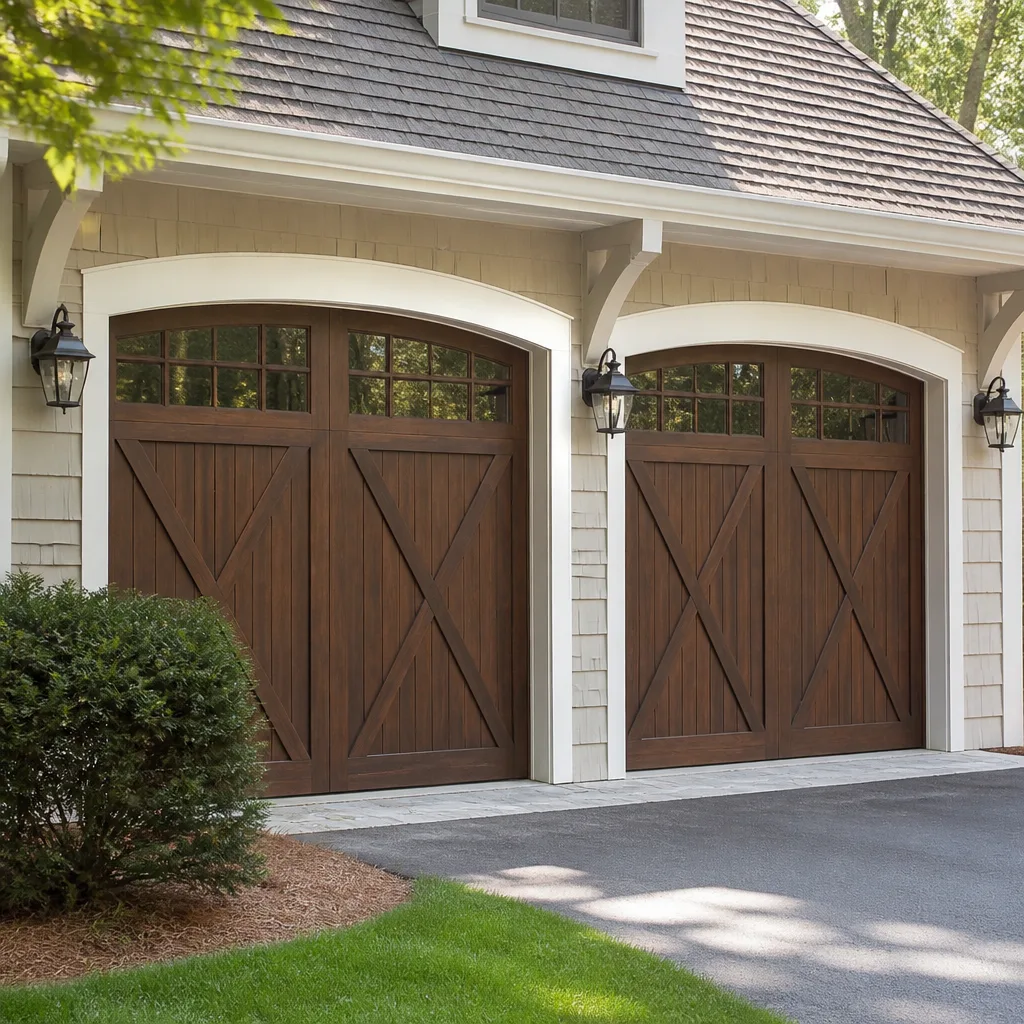 Carriage house
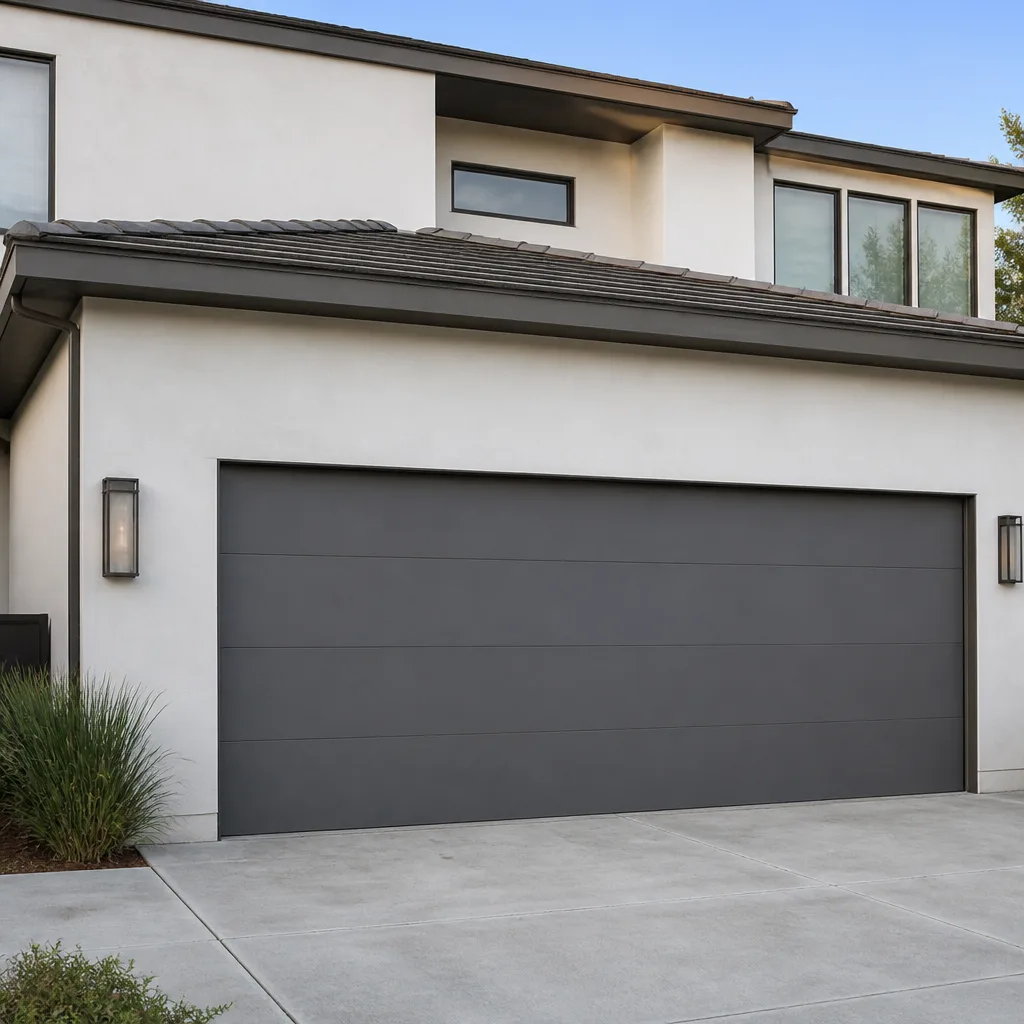 Modern flush
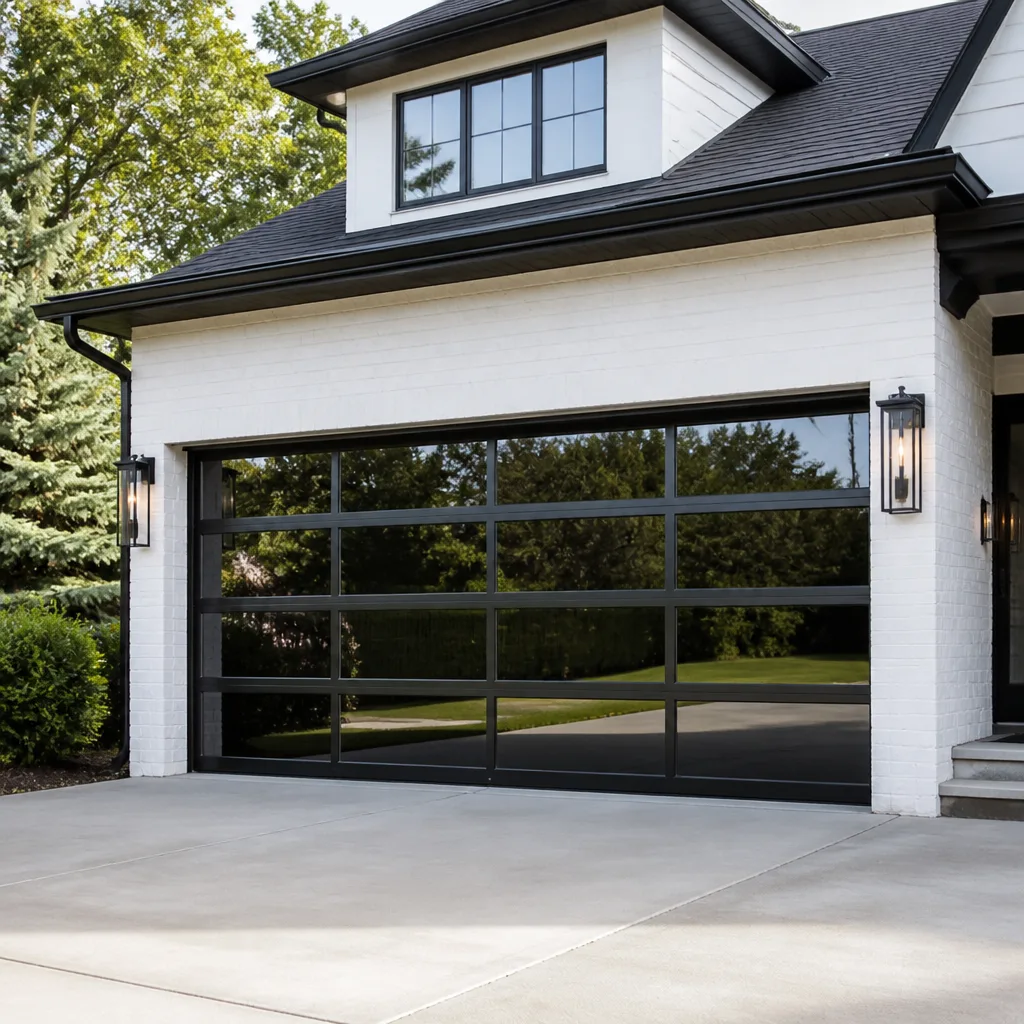 Full-view glass
 LiftMaster openers
 Chamberlain openers
Full 25-point door and opener safety check with every visit - springs, cables, rollers, tracks, and your LiftMaster or Chamberlain opener included
You get a price before we start. It does not change when the pro arrives.
Get your free estimateDIY vs Professional Garage Door: The Alexandria Homeowner’s Decision Guide
Most homeowners assume the DIY versus professional question is about skill. It isn’t. It’s about physics and torque. A torsion spring on a standard residential door stores enough mechanical energy to fracture bones or cause fatal injury when it releases during adjustment. That’s not a liability disclaimer – it’s the actual load on the hardware above your car. A 200-pound door’s spring system holds roughly 150 to 200 ft-lbs of torque at rest, and it doesn’t care whether you watched three tutorials before you put a wrench on it.
But here’s the part most guides get wrong: not every garage door task is dangerous. Lubrication, sensor alignment, remote programming, weatherstripping – these are genuinely homeowner-appropriate, and hiring a technician for them wastes money. This guide draws the line precisely so Alexandria homeowners stop over-hiring for the easy jobs and stop underestimating the ones that can hurt them.
Quick Answer
In Alexandria, routine maintenance like lubrication, sensor alignment, remote programming, and weatherstripping is safe for most homeowners to handle. Anything involving torsion springs, tension cables, or track realignment under load is professional-only work – the stored energy in those parts can cause serious injury or death if released incorrectly. Everything in between, like opener logic board issues or off-track doors, needs a diagnosis before you decide, because the fix is often cheaper than the damage a wrong DIY attempt causes.
Styles & brands we work with
- Raised-panel steel
- Carriage house
- Modern flush
- Full-view glass
- LiftMaster openers
- Chamberlain openers
Table of Contents
- The Three Tiers of Garage Door Work
- Safe DIY Tasks You Can Do Yourself
- Professional-Only Tasks and Why
- The Real Cost of DIY on Borderline Tasks
- Can You Program Your Own Opener?
- Alexandria HOA and Warranty Considerations
- The Honest Middle Path: Diagnose, Then Hand Off
- How Alexandria’s Climate and Housing Stock Affect the Decision
The Three Tiers of Garage Door Work
Garage door tasks don’t fall into two neat boxes. They fall into three, and the middle box is where Alexandria homeowners get into trouble – not because they’re reckless, but because the tiers aren’t obvious from the outside. A sensor looks as complicated as a spring. It isn’t.
Here’s how we classify work on any door, whether it’s a Clopay steel panel door, an Amarr carriage-style model, or a Wayne Dalton door with a TorqueMaster spring system:
- Tier 1 – Safe for homeowners: Tasks that involve no stored energy and no load-bearing hardware. Lubrication, sensor alignment, remote programming, weatherstripping replacement, visual inspections, and cleaning of tracks and photo-eye lenses.
- Tier 2 – Diagnose first, then decide: Tasks where the fix could be simple or could be a symptom of something dangerous. A door that reverses randomly, an opener that hums but won’t lift, a door that’s slightly off-track. You can diagnose. Whether you should repair depends on what you find.
- Tier 3 – Professional-only, no exceptions: Torsion spring replacement, extension spring replacement, cable replacement, track realignment on a loaded door, and any work that requires releasing spring tension.
The reason this matters in Alexandria is housing density. Most of the city’s single-family homes sit close together with attached garages, so a door that fails partway and won’t close leaves a home open to the driveway. A Tier 3 job attempted by a homeowner doesn’t just risk injury – it often leaves the door stuck halfway and the house exposed while a technician is called anyway.
Safe DIY Tasks You Can Do Yourself
These are the jobs where a homeowner saves money with zero added risk. We’re not going to pretend they’re harder than they are. Most take under 30 minutes and need no special tools beyond a socket set, a screwdriver, and a can of lubricant.
What’s genuinely safe to handle
- Lubrication: Apply a garage-door-specific lubricant to hinges, rollers, and the torsion bar bearings. Avoid anything sticky that attracts grit – that’s the leading cause of rollers that start squealing in Alexandria’s humid summers.
- Photo-eye sensor alignment: If your door won’t close and the opener light blinks, the safety sensors are usually misaligned. Both lenses should point directly at each other, about six inches off the floor. A loose bracket or a bumped sensor is the fix 90 percent of the time.
- Remote and keypad programming: Most homeowners can add or replace a remote on modern systems. See the opener section below for brand-specific detail.
- Weatherstripping replacement: The rubber seal at the bottom of the door and the foam seals around the frame. This is a push-on or nail-on job and it makes a real difference to drafts and to keeping rain out during Alexandria’s spring storms.
- Visual inspection: Look at the springs for gaps or rust, check the cables for fraying, and listen to the door as it cycles. You’re looking, not touching.
One caution even on safe jobs: never reach into the track to test a sensor or retrieve an object while the door is moving, and never disable a safety sensor to get a door to close. Those sensors exist because a closing door can trap a child or a pet. If a sensor fails and no amount of alignment gets it working, that’s a wiring or logic board issue – a Tier 2 diagnosis, not a DIY fix.
Professional-Only Tasks and Why
The line between safe and dangerous isn’t a skill line. It’s a stored-energy line. Torsion springs, extension springs, and the cables that hold them under tension are the only parts of a garage door system that can kill you if they release wrong. That’s the entire reason this tier exists.
Torsion springs are wound to counterbalance the door’s weight exactly. When a technician replaces one, the spring is wound to a specific number of turns matched to door weight, drum size, and cable length. Getting it wrong by a quarter turn means the door is either too heavy to lift by hand in an outage or too light, which causes the opener to cycle erratically and wear out prematurely. Getting it wrong by more than that means the spring can fail catastrophically on the first cycle. Extension springs on older Alexandria homes – common on mid-century construction in the Rosemont and Beverley Hills neighborhoods – carry the same risk plus the added danger of the safety cable, which must be routed correctly or the spring becomes a projectile when it breaks.
Why this isn’t a “practice makes perfect” job
You can’t practice a torsion spring replacement. There’s no do-over between the first wind and the injury. Cables are the same story: they run under tension and a slipping cable can whip a wrench into a hand hard enough to break it. Track realignment under load is subtler – the door is held up by springs, but a misaligned track concentrates force on a single hinge point, and releasing a hinge under load can drop the door.
This is the work we handle on every brand we service, and it’s why spring repair is treated as its own specialty rather than a general repair add-on. Our technicians have up to 14 years of experience, and spring work is the one category where a small mistake has no manageable failure mode. Call (833) 508-9704 for a free estimate before you touch a spring or a cable. We answer 24/7.
The Real Cost of DIY on Borderline Tasks
The DIY argument usually weighs the price of parts against the price of a service call. That’s the wrong math. The right math is what a botched attempt costs you on top of the repair you eventually pay for anyway – and on a garage door, that second number is usually larger than the first.
Here’s what goes wrong on the borderline tasks:
- Wrong spring on a correct-weight door: Buying a spring by the old one’s color code and one visual measurement is the most common error. If the wire gauge or wound length is off, the opener fights the spring every cycle, wearing the gear and drive assembly. You end up replacing the opener too.
- Stripped torsion bar or drum: Improvised winding tools bite into the bar. Once the bar is scarred, a proper replacement becomes more involved.
- Bent track: Track realignment without a load-rated brace usually means a door that runs off-center and starts hitting the frame. That’s a panel replacement decision, not a repair.
- Damage to the vehicle below: A door that drops unexpectedly lands on whatever is parked underneath. In densely parked Alexandria garages, that’s frequently a car.
- Opener logic board damage: Jumping or bypassing a sensor to force a door closed can send voltage where it shouldn’t go. Logic boards on Chamberlain Security+ 2.0 and Genie Intellicode systems aren’t cheap to replace.
Do the math before you decide
The honest way to weigh it is: what’s the probability the DIY attempt succeeds, and what’s the cost if it doesn’t? For lubrication, the success probability is high and the failure cost is zero. For a spring, both sides of that equation are bad.
If you’re weighing repair or replacement entirely, our garage door repair page breaks down what a typical fix involves. When a repair reveals that the door panels are past saving – common on older steel doors with rust along the bottom section after a few wet Alexandria winters – we’d rather tell you that than patch it.
Can You Program Your Own Opener?
For most modern openers, yes – and it’s a five-minute job. But the answer depends on the brand and the generation, and that’s where homeowners get stuck. Here’s how to know which category your opener is in.
DIY-programmable openers
- Chamberlain Security+ 2.0 and LiftMaster myQ: Adding a remote is a button-press sequence on the opener head plus the remote. Connecting to a phone app usually requires nothing more than the app and a Wi-Fi connection. Reconnecting after a router change is a homeowner job.
- Genie Intellicode: Remote pairing is a press-and-hold on the opener’s learn button plus the remote button. Straightforward.
- Craftsman: Most units sharing the learn-button design are programmable the same way.
Where DIY runs out
The wall control panel on Chamberlain and LiftMaster systems sometimes needs a dealer-level sequence to unlock advanced settings – particularly the “lock” functions, force limits, and travel limits on units that have drifted out of adjustment. On those you may program the remote fine but still have a door that stops halfway. That’s a travel-limit problem, not a remote problem, and it needs someone to observe the door cycle, not just press buttons.
If the remote pairs but the door still behaves oddly, don’t keep reprogramming. Our garage door opener repair team can check travel and force limits, logic board health, and drive gear wear in one visit. Fast dispatch, 7am-7pm, Sunday through Friday, and the estimate is free before any work starts.
Alexandria HOA and Warranty Considerations
This is the part of the DIY decision most guides skip, and in Alexandria it matters. Many HOAs and some manufacturer warranties have clauses about who performed the work. Read yours before you pick up a tool, particularly on a Tier 2 or Tier 3 job.
What to look for in your HOA documents
- Documentation requirements: Some HOA rules require proof of a licensed contractor for exterior modifications to the garage door or its hardware. A homeowner-performed repair can leave you out of compliance with your own association’s rules.
- Warranty voidance clauses: Some manufacturer warranties on door systems exclude failure caused by unqualified repair work. If a spring fails again after a homeowner replacement, the warranty may not cover the door damage that follows.
- Structural attachment: Changing the track brackets or reinforcing the header attaches to the structure of the house. If your HOA governs structural alterations, a homemade reinforcement may not qualify.
Read your HOA rules and your door’s warranty packet, then make the call. In Alexandria, where many neighborhoods have active associations, a quick check with your HOA board is worth ten minutes – it removes the guesswork. It’s also why calling a licensed professional for the spring and cable work keeps you clean on both fronts: your work is documented, and the pro is licensed and insured as their state requires.
The Honest Middle Path: Diagnose, Then Hand Off
You don’t have to choose between all-DIY and all-hire. There’s a genuinely useful middle path: the homeowner does the diagnosis and preparation, then hands the dangerous portion to a technician. It cuts labor time and, in our experience, often cuts the total bill.
How the hand-off works
- Gather the symptoms. Write down what the door does: reverses immediately, won’t move at all, lifts a few inches and stops, makes a grinding sound, hangs crooked. The pattern narrows the cause faster than anything else.
- Note the brand and model. Check the opener head for the label, and the door panels for the manufacturer stamp. If it’s a Genie, a Clopay, an Amarr, or a Wayne Dalton, that’s the detail we need to arrive prepared.
- Do the safe checks. Sensors aligned? Weatherstripping intact? Everything lubricated? Clear the easy items first.
- Stop before the springs and cables. If the door is heavy to lift by hand, if the spring looks broken or has a visible gap, or if a cable is slack or frayed, stop. Don’t touch it. Describe it instead.
- Call with the diagnosis. Give us the symptoms and brand, and we’ll tell you what a fair estimate looks like. If we can give you an exact written price over the phone for a known repair, we’d rather do that than have you pay for a visit to learn what you already found.
The hand-off works because the expensive part of a service call is the diagnosis and the prep, not the wrench-turning. When you’ve done the safe tier, the technician starts at the danger tier and leaves sooner. For a new door or full replacement, the same logic applies in a different way: the measurement and selection stages are where homeowners save the most by doing homework first. Our garage door installation page walks through what a proper measure involves before a quote.
How Alexandria’s Climate and Housing Stock Affect the Decision
Two local realities shape which garage door tasks end up on your plate here. The first is climate. Alexandria sits in a humid subtropical zone with four distinct seasons, and that cycle is hard on garage door hardware. Springs carry more load as temperatures swing between a humid July and a cold January, and wood-framed door panels expand and contract through the year. The practical DIY consequence: lubrication and visual inspection aren’t optional here, they’re the two routine tasks that actually extend spring and hardware life. Skipping them is the most common reason springs wear out early – the worn spring then becomes a Tier 3 emergency you didn’t see coming.
The second is housing age and type. Alexandria has a wide mix: mid-century homes with extension springs, newer townhouses with torsion systems and high-lift tracks, and attached garages that are tight for parking. That variety means the answer to “can I do this myself” is genuinely door-by-door. A TorqueMaster system on a Wayne Dalton door is a different DIY proposition than a standard torsion bar, and an older extension-spring setup has its own hazards. When you’re not sure which system you have, that uncertainty is itself the answer: get it identified by someone who works on that hardware daily.
Which is exactly what we do. Every technician, tool, and part is specific to garage doors – no divided attention across other trades – and we service LiftMaster, Chamberlain, Genie, Clopay, Amarr, Wayne Dalton, Craftsman, and Raynor systems. If you’re starting from scratch on repairing or replacing the door entirely, the Garage Door Repair Alexandria Pros team can take you from diagnosis to installation without a second call.
Common Mistakes to Avoid
- Trying to “test” a torsion spring by hand. Winding or unwinding a spring by hand with improvised tools is the most dangerous DIY decision a homeowner can make. It’s not that it’s hard – it’s that a single slip has no safe outcome.
- Buying a spring by color code alone. Color codes tell you the wire size, not the wound length. A mismatched spring puts the wrong load on your opener every cycle and shortens its life.
- Disabling a safety sensor to force a door closed. In a densely packed Alexandria garage, that’s the move that puts a child or a pet at risk. Fix the sensor instead.
- Adjusting travel or force limits to get a door moving again. Raising force limits masks the real problem. If the door is binding, the fix is at the binding point, not the control board.
- Lubricating tracks with grease or WD-40. Tracks and rollers want a dry-type or garage-door-specific lubricant. Grease turns into a grit magnet.
- Ignoring an HOA clause until a claim comes up. A spring failure that damages the door after unqualified repair can leave you paying for both fixes out of pocket if your HOA or warranty excludes it.
- Treating a slightly off-track door as “good enough.” Off-track doors wear their rollers fast and eventually jump the track entirely, usually when you’re least able to deal with it.
See the difference
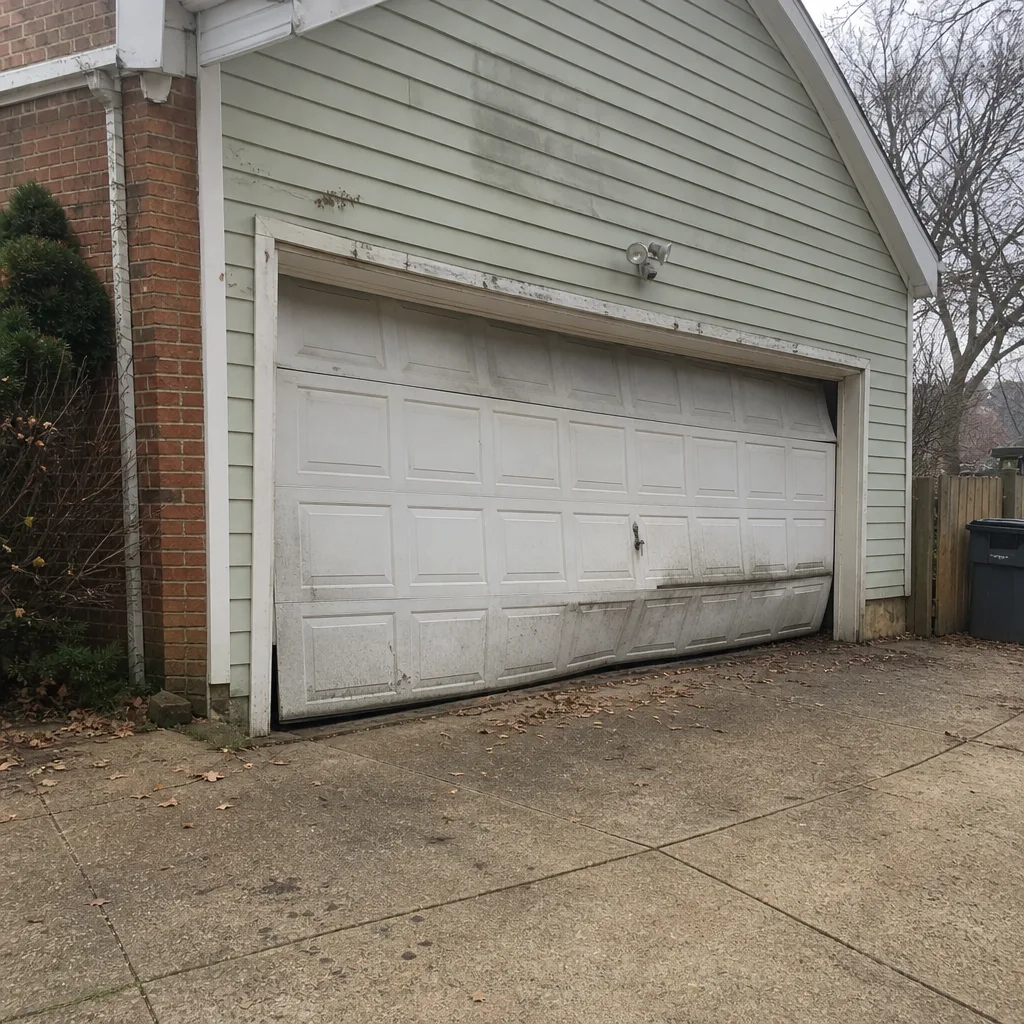 Before
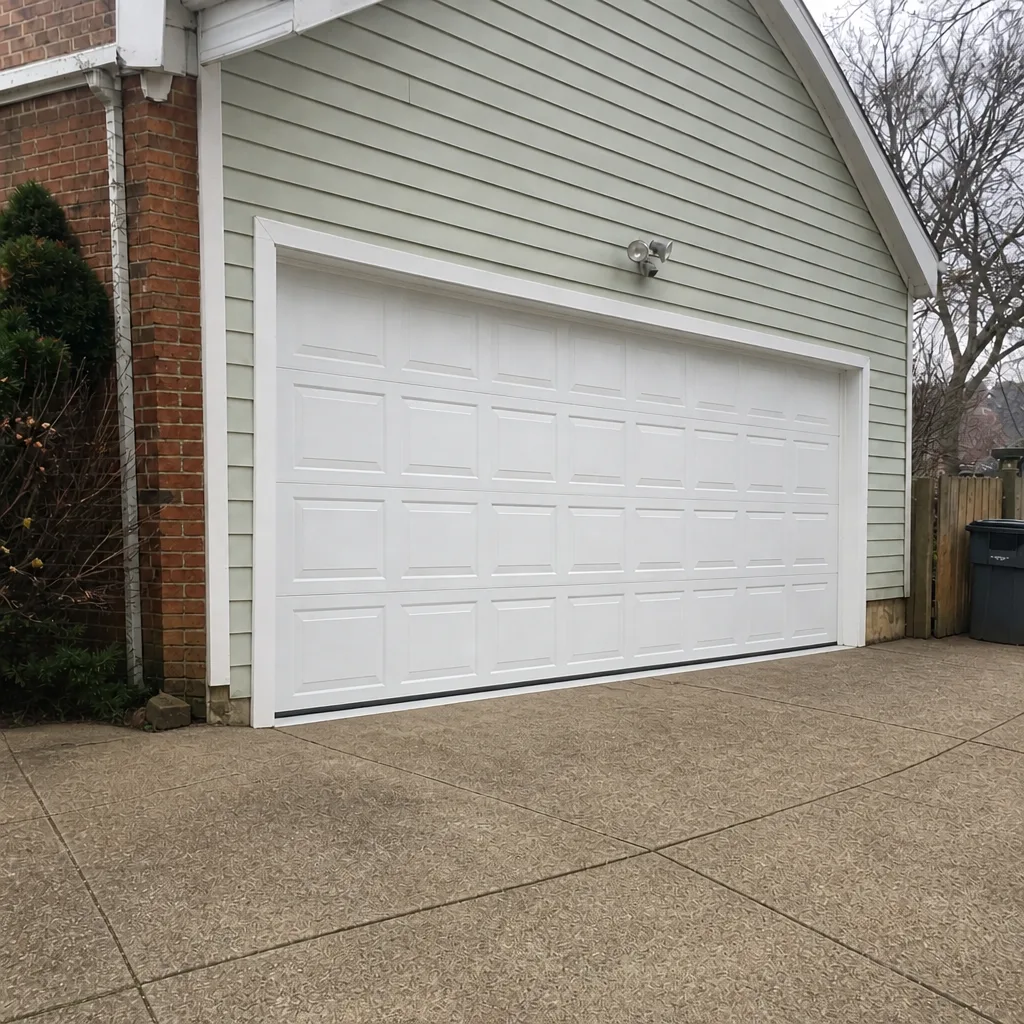 After
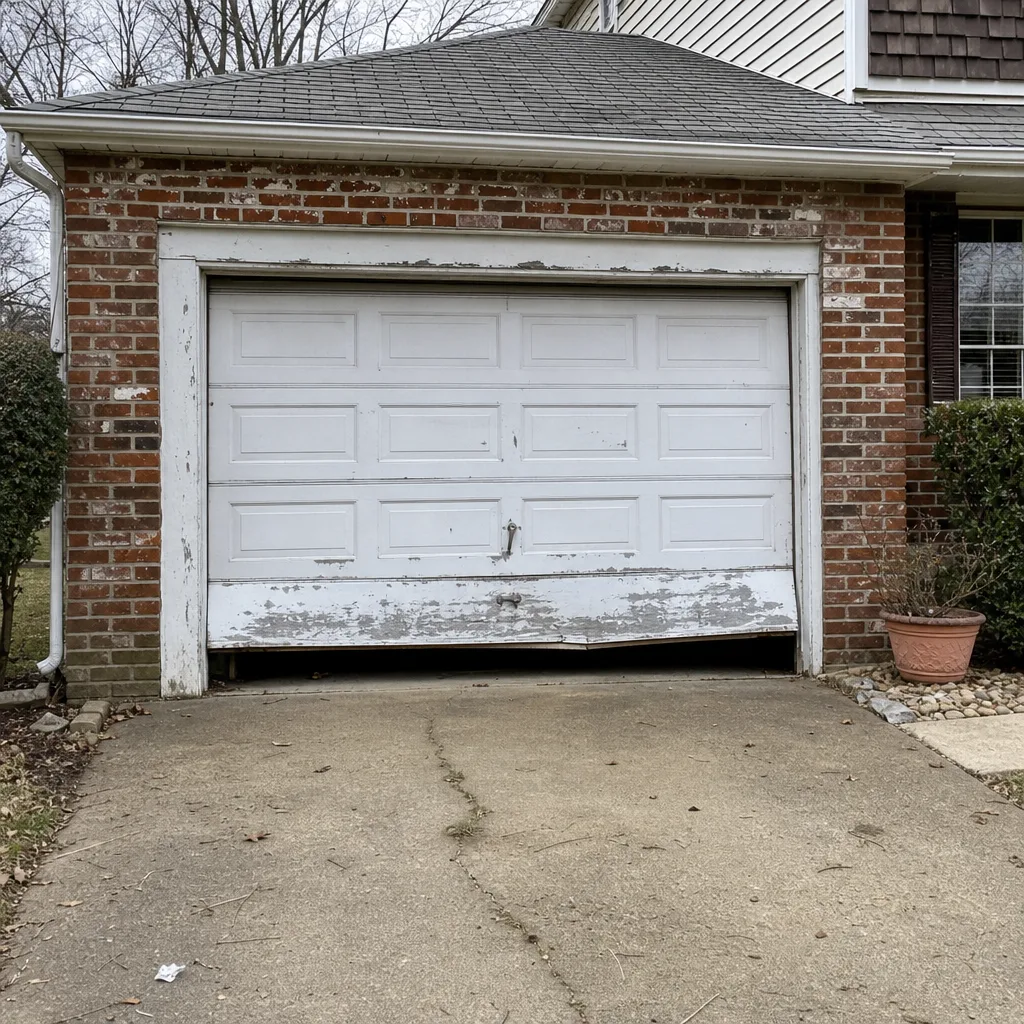 Before
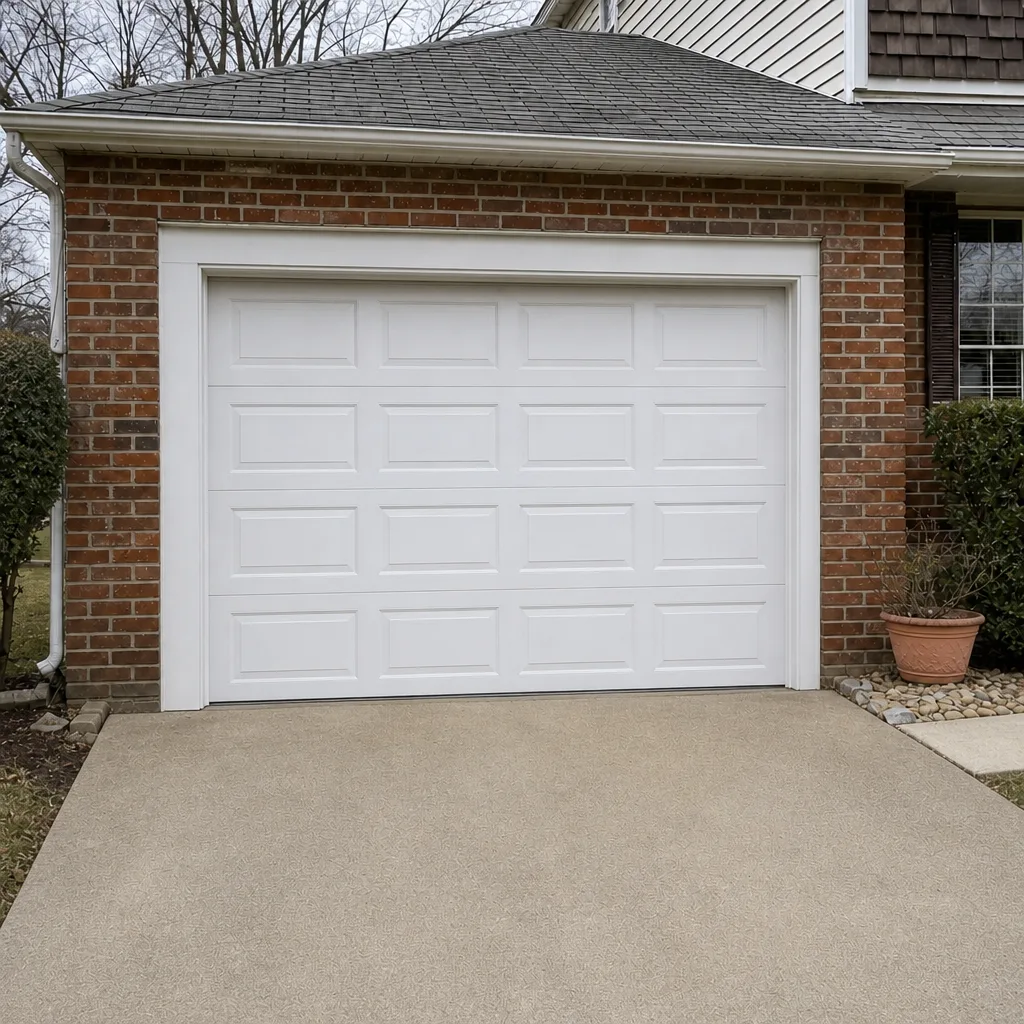 After
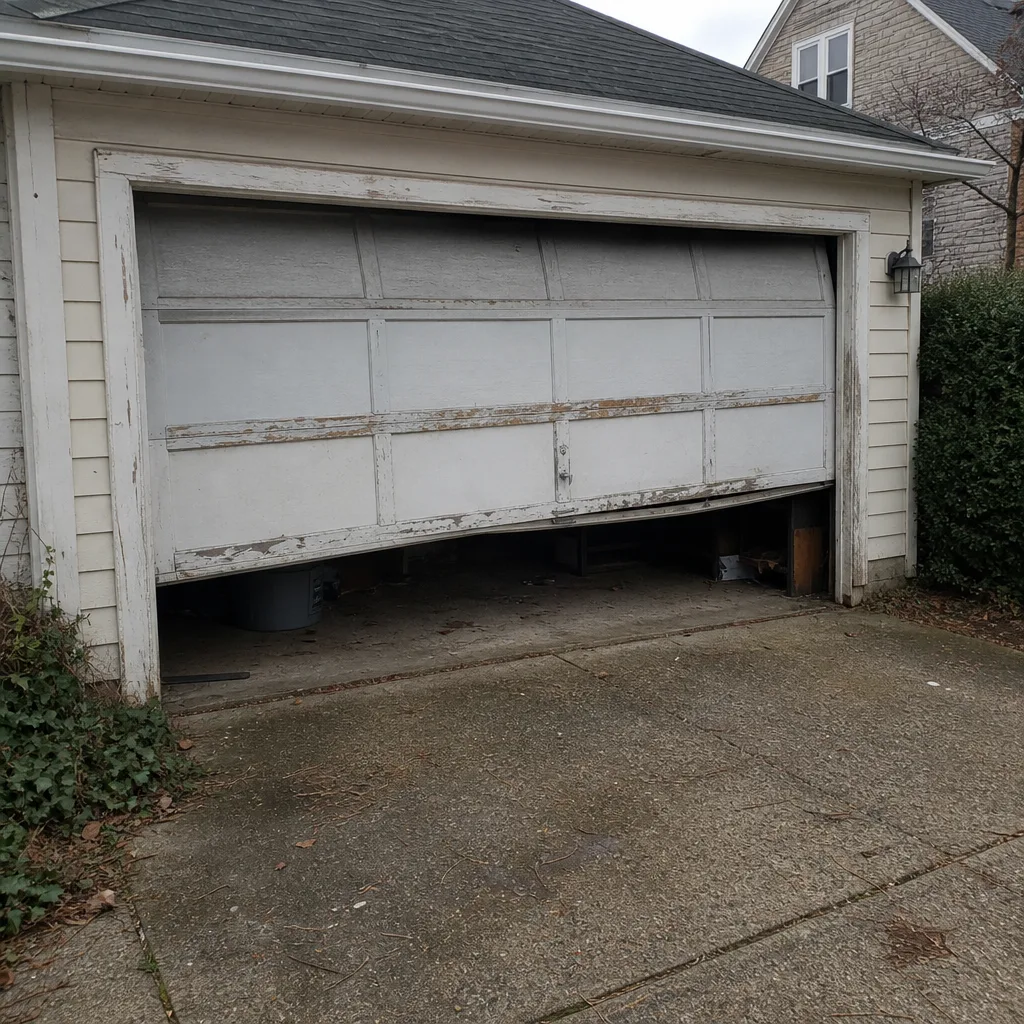 Before
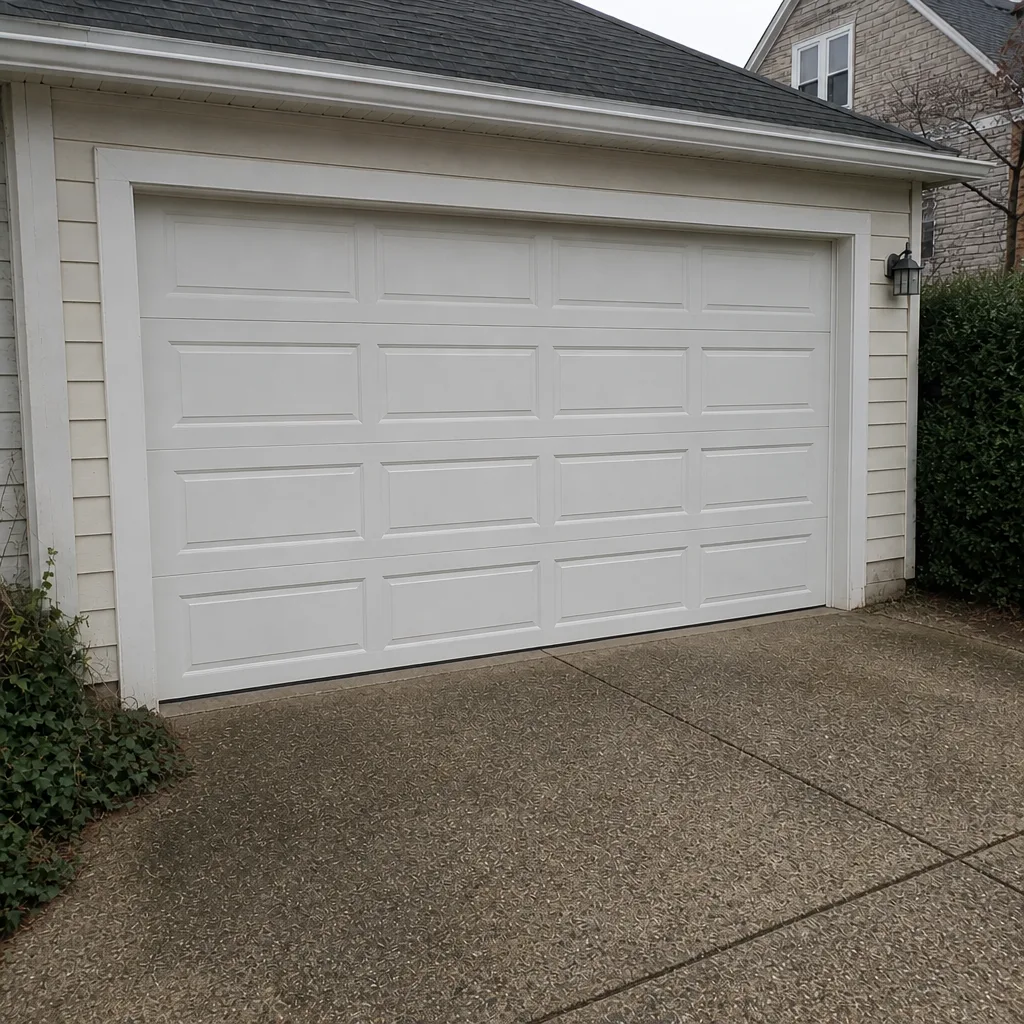 After
When to Call a Professional
Call a professional for anything involving a spring, a cable, or a track under load – that’s the hard line. Also call for a door that’s stuck open, a door that won’t close with a car trapped inside, an opener that hums without lifting, or a door that has dropped on one side. Those are signs that the diagnosis could land in Tier 3, and the diagnosis is worth more than the risk of guessing. Garage Door Repair Alexandria Pros offers free estimates in Alexandria – call (833) 508-9704. We answer 24/7. Fast dispatch from 7am to 7pm, Sunday through Friday, and every price is quoted and agreed in writing before work starts.
Frequently Asked Questions
Safe homeowner jobs include lubrication, photo-eye sensor alignment, remote and keypad programming, weatherstripping replacement, and visual inspection. None of these involve stored energy or the load-bearing hardware. If the diagnosis points at a spring, a cable, or a track under load, stop and call a professional.
Spring replacement is billed per spring, and a matched pair is usually replaced together. Because we don’t quote one range for both, call (833) 508-9704 for a written estimate on your door – it’s free and it’s the price before any work starts. Estimates are free, and we’ll tell you exactly what a spring replacement involves for your door’s weight, drum size, and brand.
No. A torsion spring is under load at rest, and releasing or winding it by hand can fracture bones or cause fatal injury. This is the one garage door task where there’s no safe amateur version. Our technicians have up to 14 years of experience with the exact hardware, and we treat spring repair as its own specialty.
Yes, we offer same-day and emergency service for doors that are stuck open or won’t close. Call (833) 508-9704. We answer 24/7. Fast dispatch from 7am to 7pm, Sunday through Friday. A call outside dispatch hours is booked into the next opening, Sunday through Friday, 7am to 7pm.
No. We quote and agree on the price before any work starts. The written estimate sets the final price, so the invoice can’t come in higher than the agreed amount. Any additional work is only done after you approve a revised quote.
Yes – the local professional is licensed and insured as their state requires. We connect you with independent local professionals who perform the work, and the licensing and insurance are what you’d expect from a specialist garage door operation. For the exact documentation on a job, just ask when you call.
It can. Mid-century homes in neighborhoods like Rosemont and Beverley Hills often have extension springs, and newer townhouses commonly use torsion systems with high-lift tracks. The system you have determines the safe DIY scope, so identify the door and opener first. If you’re not sure, that’s the signal to call for a diagnosis.
We work on LiftMaster, Chamberlain, Genie, Clopay, Amarr, Wayne Dalton, Craftsman, and Raynor. Brand familiarity means the technician arrives already familiar with the logic boards, drive systems, and panel specs – no learning curve on the job. That’s also why we can often quote a known repair precisely over the phone.
The Bottom Line
The DIY vs professional decision on a garage door isn’t a skill judgment. It’s a task judgment. Homeowners should handle lubrication, sensor alignment, remote programming, weatherstripping, and inspection – those save real money and carry no risk. Everything on the stored-energy side – springs, cables, loaded tracks – belongs to a trained professional, full stop. The middle sits the borderline jobs, and the right move there is always to diagnose first and decide second, with the written price agreed before any work starts. We’ve seen every version of this decision go wrong, and the pattern is the same: the jobs worth doing yourself are the ones nobody gets hurt doing, and the ones that need a pro need one before you pick up the tool, not after. Call (833) 508-9704 for a free estimate in Alexandria.
Written by the team at Garage Door Repair Alexandria Pros.