
Last updated November 22, 2026
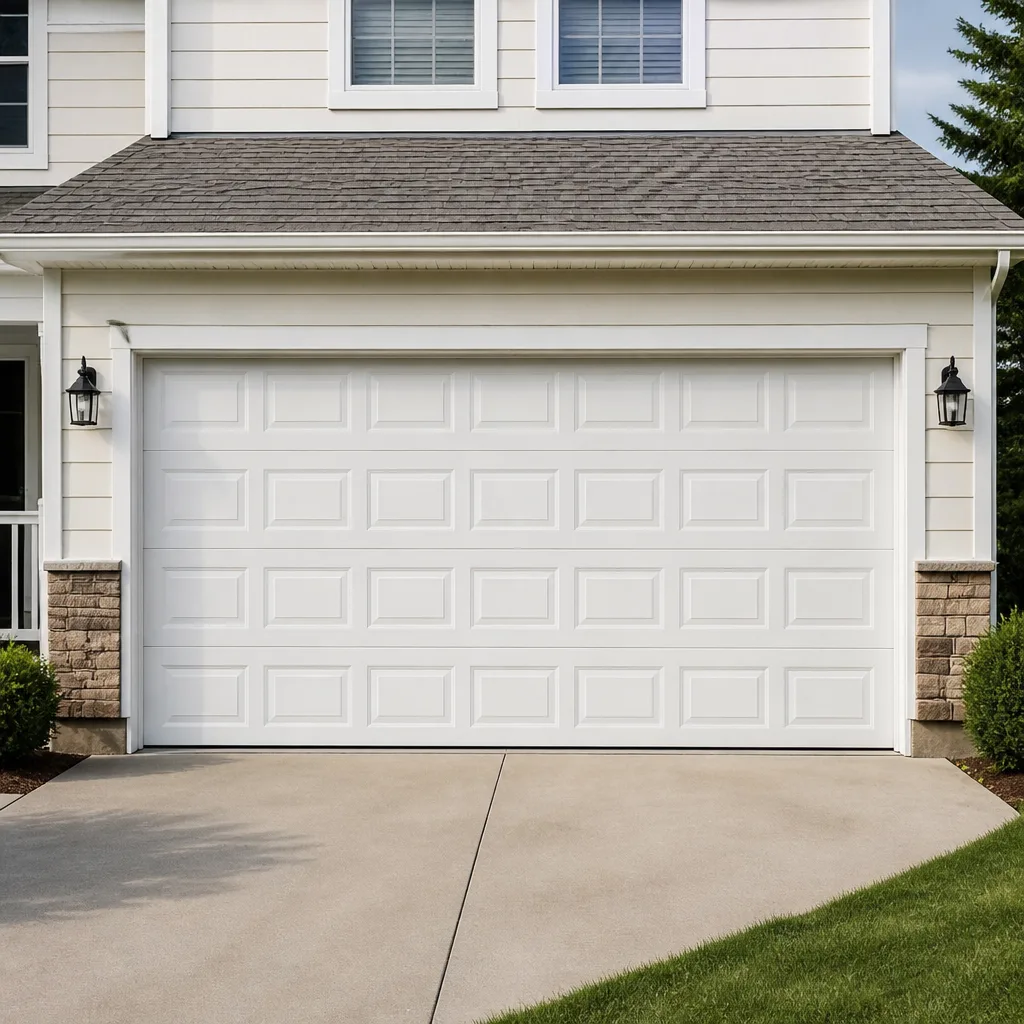 Raised-panel steel
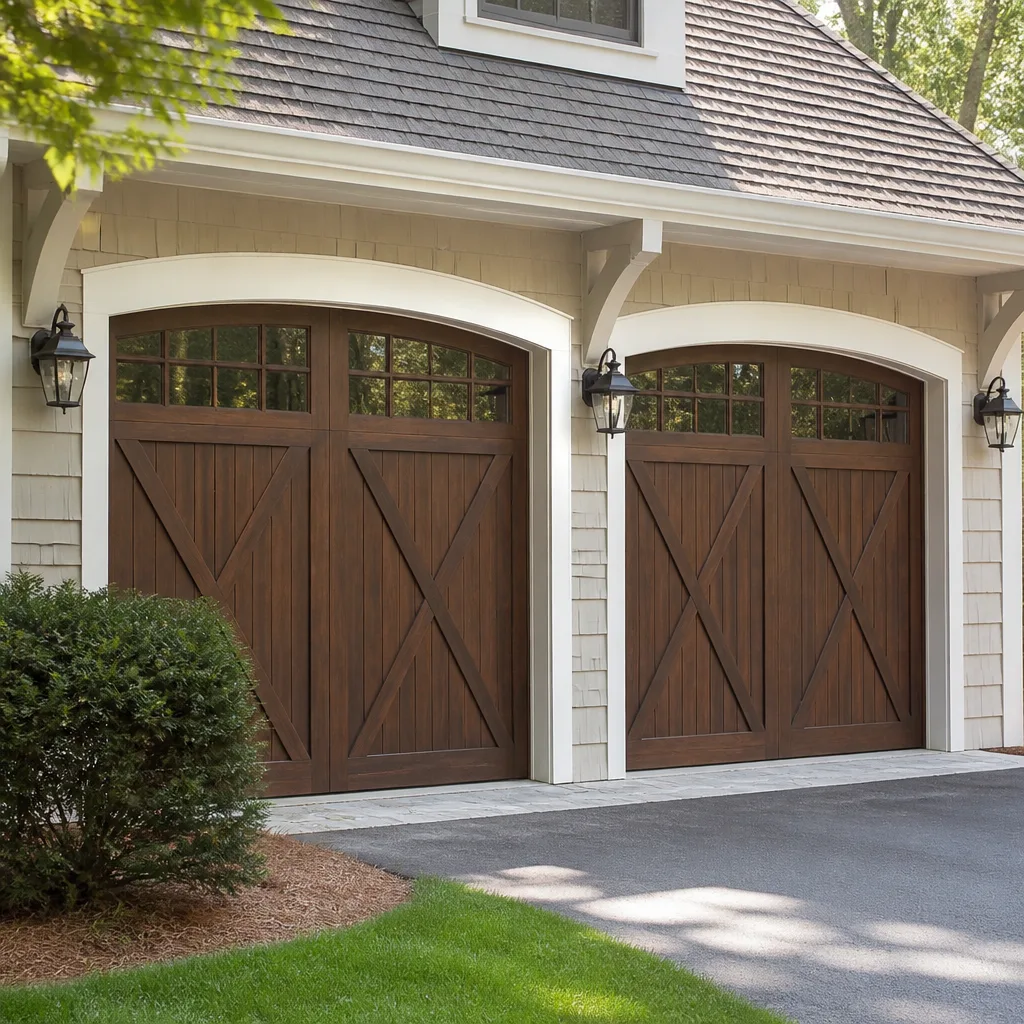 Carriage house
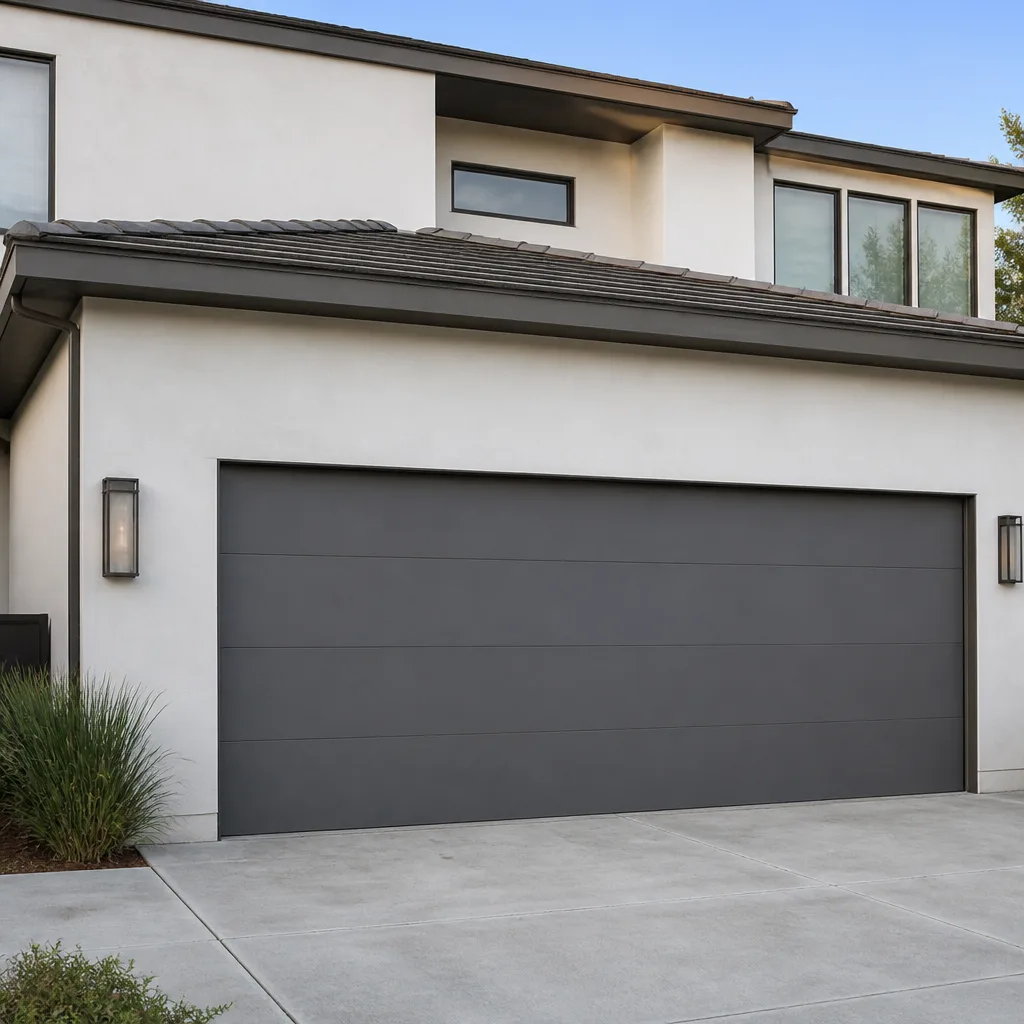 Modern flush
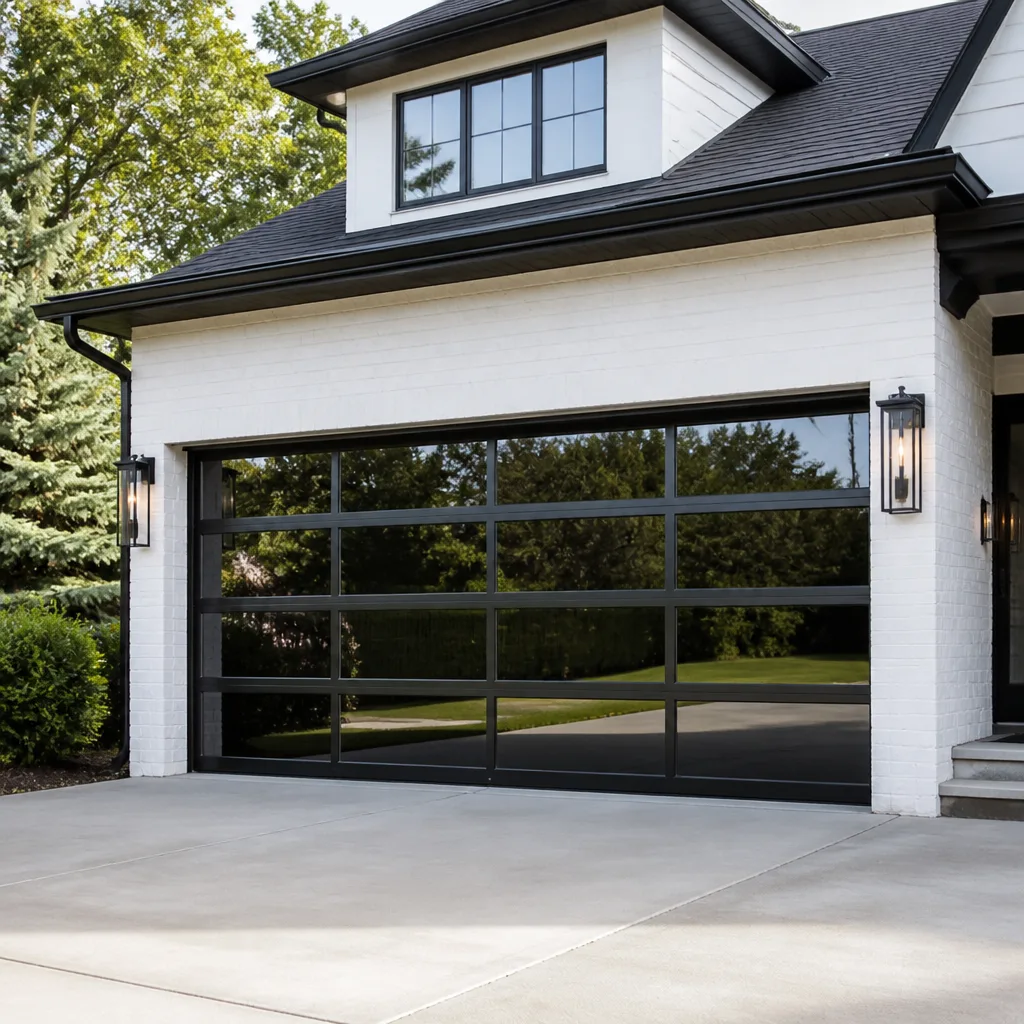 Full-view glass
 LiftMaster openers
 Chamberlain openers
Full 25-point door and opener safety check with every visit - springs, cables, rollers, tracks, and your LiftMaster or Chamberlain opener included
You get a price before we start. It does not change when the pro arrives.
Get your free estimateSeasonal Garage Door Care for Alexandria: Year-Round Homeowner’s Guide
More garage doors in Alexandria fail during the last two weeks of February than at any other point in the year. Not because of a single hard freeze, but because of repeated freeze-thaw cycling that fatigues springs, cracks seals, and swells wood panels in ways that show up suddenly. The same pattern repeats at the other end of the calendar: peak August humidity quietly degrades everything it touches, and the failure surfaces weeks later when the weather turns. This guide explains both windows, walks through what to inspect before each one, and gives you a month-by-month task calendar built around Northern Virginia’s actual climate rather than generic national seasons.
Quick Answer
Garage door care in Alexandria should be scheduled around two high-failure windows, not the standard four seasons: late February freeze-thaw, when temperature swings fatigue springs and crack weather seals, and the July-August humidity peak, when steel panels expand, opener motors run hot in non-conditioned garages, and rubber seals degrade under UV. Fall prep centered on debris and pest intrusion from Alexandria’s heavy tree canopy runs a close third. Handle these three windows and most of the annual service calls a typical door generates never happen.
Styles & brands we work with
- Raised-panel steel
- Carriage house
- Modern flush
- Full-view glass
- LiftMaster openers
- Chamberlain openers
Table of Contents
- Why Alexandria Has Two Failure Windows, Not Four Seasons
- Late Winter: The February Freeze-Thaw Inspection
- Spring: Reset and Align Before Summer Heat
- Summer: Thermal Expansion, Heat, and UV Degradation
- Fall: The Tree Canopy Problem
- Replacing Bottom Seals Before Winter
- A Month-by-Month Task Calendar for Northern Virginia
- Common Mistakes to Avoid
Why Alexandria Has Two Failure Windows, Not Four Seasons
Most seasonal garage door advice is written for a national audience and assumes a smooth progression from spring maintenance to winter prep. Alexandria doesn’t work that way. The region sits in a transition zone where continental cold air and Atlantic moisture trade places, sometimes within the same week, and the garage door sits exactly at the point where those changes hit hardest. A door is a large metal, wood, or composite slab hanging on a torsion spring, sealed against the outside with rubber. Every one of those materials responds to temperature and humidity differently.
What that produces in practice is two concentrated failure windows. The first runs roughly from late January through mid-March, when daytime temperatures climb above freezing and nighttime temperatures drop back below it. The freeze-thaw cycle repeats dozens of times in that stretch. The second runs from mid-July through early September, when relative humidity sits high and garage interiors, which are rarely conditioned, turn into heat traps.
Between those windows, the door often behaves fine. That’s the trap. Failures cluster at the edges of the windows because damage done in one season doesn’t announce itself until conditions change again. This is why we structure maintenance around those two dates rather than a tidy quarterly list.
Alexandria’s housing stock makes it more pronounced. Many garages in older neighborhoods sit partially below grade, which means the floor slab stays cooler and damper than the surrounding soil. Detached garages in the Del Ray and Rosemont areas bake in summer and take freeze-thaw in winter with no conditioned space attached to buffer the swings. A door on a home in Old Town faces different stresses than one on a newer build off Duke Street, but both land in the same two windows.
Late Winter: The February Freeze-Thaw Inspection
The freeze-thaw window is the single most important maintenance period of the year in Alexandria. Springs are the item to watch. A torsion spring is a coil of high-tension steel under constant load. Repeated expansion and contraction changes its internal stress, and a spring that’s been carrying a load through a full winter cycling season tends to let go when the next hard temperature swing hits. This is why a door that worked on a Tuesday morning in mid-February stops working by Thursday afternoon with no obvious cause.
What to check during this window:
- Spring appearance. A visible gap in a torsion spring coil, or a torsion spring with a stretched section, is a sign it’s near the end of its service life. Do not touch it, and do not try to tighten it.
- Weather seal integrity. Run a hand along the bottom seal and the side jambs. Rubber that has gone brittle or shows hairline cracks will not recover when the temperature climbs, and once it fails it lets water and cold air straight past the door.
- Panel swelling. Wood and composite doors swell at the panel edges in sustained moisture. Look for binding in the track that wasn’t there in the fall. Steel doors, including most Clopay and Amarr models, will instead show frost or condensation patterns that hint at seal gaps.
- Cable condition. Frayed or kinked lift cables are a hard stop. A failing cable under load is a genuine safety issue.
- Opener response. Cold hydraulic fluid and stiff grease make an opener work harder. If the door hesitates at the start of travel, the opener is compensating for something else.
Springs and cables are the one part of a garage door system where a mistake can seriously injure someone. The stored energy in a torsion spring is enormous and it releases without warning. If anything about the spring, cable, or drum assembly looks wrong in late winter, that’s a job for a trained technician with the right winding bars and the right training. A visual inspection is safe and worth doing. Anything beyond that is not.
We work on the spring systems in every major brand, which means when the door lets go in February, the technician arrives already knowing whether the hardware on a particular Wayne Dalton or Craftsman door has a known failure mode. That familiarity matters most in this window.
Spring: Reset and Align Before Summer Heat
Spring is the reset season, and it sits between the two failure windows, which is exactly why it’s worth the effort. Anything you correct in March or April won’t have to be corrected under stress in July. The work here is mostly about alignment, lubrication, and balance, all of which you can check safely on your own door.
- Test the door balance. Disconnect the opener using the manual release, lift the door halfway, and let go. A balanced door stays in place. A door that drifts down or slams up is out of balance and is loading the opener with work it wasn’t designed to do.
- Check the track for alignment. Sight down each vertical and horizontal track section. Any visible bend will cause the rollers to bind, and binding gets worse as the door expands in summer heat.
- Lubricate the right places with the right product. Rollers, hinges, and the torsion bar bearings need a proper garage door lubricant, not motor oil or general-purpose grease. Grease attracts grit and grit grinds the moving parts down.
- Clear the photo-eye path. Wipe the lenses and confirm the safety reverse works. Spring pollen coats the lenses quickly and is a common reason a door refuses to close on a bright day.
- Listen before you leave it. Run the door a full cycle with the garage door closed and just listen. Grinding, popping, or a rhythmic scrape all point at something specific.
A balance problem in April becomes an opener failure in August, because a strained opener runs hotter for longer and the heat accelerates the damage. If the balance test fails, it’s worth addressing before the humidity arrives. If the repair reveals a deeper issue, our garage door repair work covers everything from the panel down to the lock mechanism, so there’s no need to call a second company for the follow-up.
Summer: Thermal Expansion, Heat, and UV Degradation
Alexandria’s summer humidity arrives with two effects on the door. The first is thermal expansion. A steel door, which describes most Clopay and Amarr installations in the area, expands measurably in direct sun. On a door facing west, the panel length changes enough that tracks that fit perfectly in March will bind by July. The symptom is a door that closes most of the way and stops, or one that grinds audibly in the last third of travel. Check the track clearances and the roller condition whenever that starts happening, and don’t assume it’s the opener.
The second effect is on the opener itself. Garage interiors in Alexandria get genuinely hot. Most openers are rated for a maximum ambient temperature, and a non-conditioned detached garage can cross that line on a hot afternoon. When the motor runs hot, the thermal overload protection kicks in and the door stops partway. If that happens repeatedly, the issue may not be the opener motor at all. It could be a balance or friction problem loading the opener with too much work, or a logic board or drive gear issue that shows up under heat stress. Genie drive systems and LiftMaster logic boards each have their own characteristic failure patterns in high heat, and knowing which one you’re dealing with saves a lot of guesswork.
The third summer item is UV degradation of the bottom seal and the side weatherstrip. Rubber left in constant sun goes hard and starts cracking at the corners first. The damage is slow and then sudden, and by the time it’s obvious, the seal is no longer doing its job. Inspect it monthly through July and August, and know that seal replacement is inexpensive compared to the water intrusion it prevents.
If your opener is behaving erratically in the heat, our garage door opener repair service covers logic boards, drive systems, and safety sensors across all the major brands. The problem is usually diagnosable in a single visit once someone knows what they’re looking at.
Fall: The Tree Canopy Problem
Alexandria has a heavy tree canopy, and every fall it dumps leaves, seed pods, twigs, and sap onto garage doors and into the space behind the weatherseal. This is the maintenance window that most homeowners skip, and it’s the one that sets up the winter problems. Fall prep is less about the door mechanism and more about everything the trees deposit on it.
The specific tasks that matter:
- Clear the debris from the top seal and side jambs. Leaves collect in the gap between the door and the header. That material holds moisture against the seal, and moisture against a seal in a freeze-thaw winter is what cracks it.
- Inspect the weatherstrip for gaps and pest entry. A gap in the bottom seal or side weatherstrip is an open door for insects and small rodents looking for winter shelter. Check the seal all the way around, including the corners, where most gaps start.
- Look for moisture trails on the interior slab. If water has been tracking under the door through the fall, that shows up now. Finding it in October means it’s fixed before the first freeze.
- Check the panels for impact damage. Falling branches and dropped limbs from the canopy cause more door damage in Alexandria than storms do. A dented bottom panel is a panel-replacement job for most Clopay and Amarr doors, and getting it done before winter means the seal can seat properly again.
- Confirm the opener safety reverse still works. Cold weather is when it matters most, and it’s quick to verify before the season turns.
Fall is also the natural time to think about the door’s long-term condition. If panels are showing separation, the seals won’t hold through winter no matter how many times you replace them, and that’s the point where garage door installation becomes a better use of money than another round of patch repairs.
Replacing Bottom Seals Before Winter
The bottom seal is the most-replaced part on any garage door, and it’s the one that determines whether your winter maintenance actually holds. Most Alexandria garage floors slope slightly toward the door so water drains out rather than pooling inside. That slope is intentional, but it means the door meets the floor at a slight angle, and the seal profile needs to account for the gap that creates. A seal that doesn’t fit the gap will lift on one side, and a lifted seal in a freeze-thaw winter cracks fast.
The common seal profiles:
- Single-T. Slides into a T-slot in the bottom of the door. It’s the simplest profile and works well where the gap is small and even.
- Dual-T or double-T. Two connecting points instead of one, which gives better grip on doors where the floor gap varies slightly across the width.
- U-shaped or bulb. A thicker bulb-style seal that handles larger gaps, which is common on older doors where the slab has settled.
- Snap-on or bead style. Common on newer steel doors from Clopay and Amarr, and the one to confirm before ordering a replacement.
Before winter, check the seal by closing the door on a piece of paper at several points across the width. If the paper pulls out easily anywhere, the seal isn’t making contact at that point and you have a gap to address. Measure the gap at the widest point and match the profile accordingly. Replacing the seal is a straightforward job on most doors, and it’s the single most cost-effective step you can take to protect a garage interior through an Alexandria winter.
If the seal replacement reveals that the bottom panel is warped or the door itself is out of square, the problem is bigger than a seal. That’s when it’s worth a conversation about the door’s overall condition rather than another seal replacement.
A Month-by-Month Task Calendar for Northern Virginia
This calendar is mapped to Alexandria’s actual climate, which means the emphasis is deliberately uneven. Some months carry heavy tasks, but a couple barely anything, because that an accurate reflection of when the climate is actually working against the door.
- January. Minimal routine work. Listen for new noises, watch for frozen seals, and note anything unusual for the February inspection. This is the month before the window opens, not the month of the window.
- February. The critical inspection month. Check spring appearance, seal condition, cable integrity, and balance. Note any panel swelling. Schedule any repair before the thaw finishes.
- March. Complete the balance test and address anything February flagged. Lubricate the rollers, hinges, and torsion bar bearings. Confirm the safety reverse is working.
- April. Clear the pollen from the photo-eye lenses. Recheck the door’s track alignment and clearances, because the season’s first warm weeks start the thermal expansion cycle.
- May. Relatively quiet. Check that the seal still contacts the floor evenly and watch for the first signs of opener strain. No major tasks unless something’s already wrong.
- June. Inspect the bottom seal and side weatherstrip for UV cracking before the worst heat arrives. Check the opener’s heat behavior on hot afternoons.
- July. Summer peak. Watch for occasional opening or closing failures on hot days and note them rather than assuming they’ll resolve. Listen for new grinding in the late travel of the door.
- August. The second peak window. If the door has developed symptoms, get them evaluated. Re-check the seal condition, which degrades fastest in these weeks.
- September. As the heat breaks, run a full balance and safety check. This is the reset before the fall canopy work begins.
- October. Fall canopy prep. Clear debris from the top seal, inspect the weatherstrip for gaps, check for moisture trails on the slab, and look for impact damage from falling limbs.
- November. Replace worn bottom seals before the first freeze. Measure the floor gap at several points and match the seal profile to the widest one. Lubricate one last time before winter.
- December. Light inspection. Note the door’s response to the first cold cycles and flag anything that seems slower or noisier than it was in October, for attention in the February inspection.
Two things make this calendar work in Alexandria specifically. First, the February and August windows get real attention instead of being treated like any other month. Second, the October and November window is treated as an active prep period, not just a quiet stretch between summer and winter.
Common Mistakes to Avoid
- Treating the four seasons evenly. Alexandria’s door failures cluster at two points on the calendar. A balanced quarterly maintenance plan misses both, because both windows fall at the edge of a season rather than in the middle.
- Ignoring a track that only binds in summer. A track that binds in July because of thermal expansion is a real problem, not something to wait out. Left alone, it accelerates roller and hinge wear and stresses the opener all season.
- Replacing the bottom seal with the wrong profile. A single-T seal on a door that needs a bulb profile will lift at one end and let water in through the whole winter. Measure the gap before you buy, and measure it at the widest point.
- Assuming the opener is the problem when the door is out of balance. An opener laboring because the door is unbalanced is a symptom, not the malfunction. Replacing the opener without fixing the balance just wears out the new one.
- Skipping the October debris clear. Leaves packed against the top seal hold moisture through the freeze-thaw cycle, and that’s when the seal fails. The leaf cleanup isn’t housekeeping, it’s seal protection.
- Trying to work on the springs. This is the mistake with the highest stakes. Torsion springs are under extreme load and a mistake can cause serious injury. A trained technician is the right answer, every time.
- Ignoring a single hot-day failure. A door that stops partway once in August due to thermal overload has told you something. A door that does it three times has an underlying problem that needs diagnosis.
See the difference
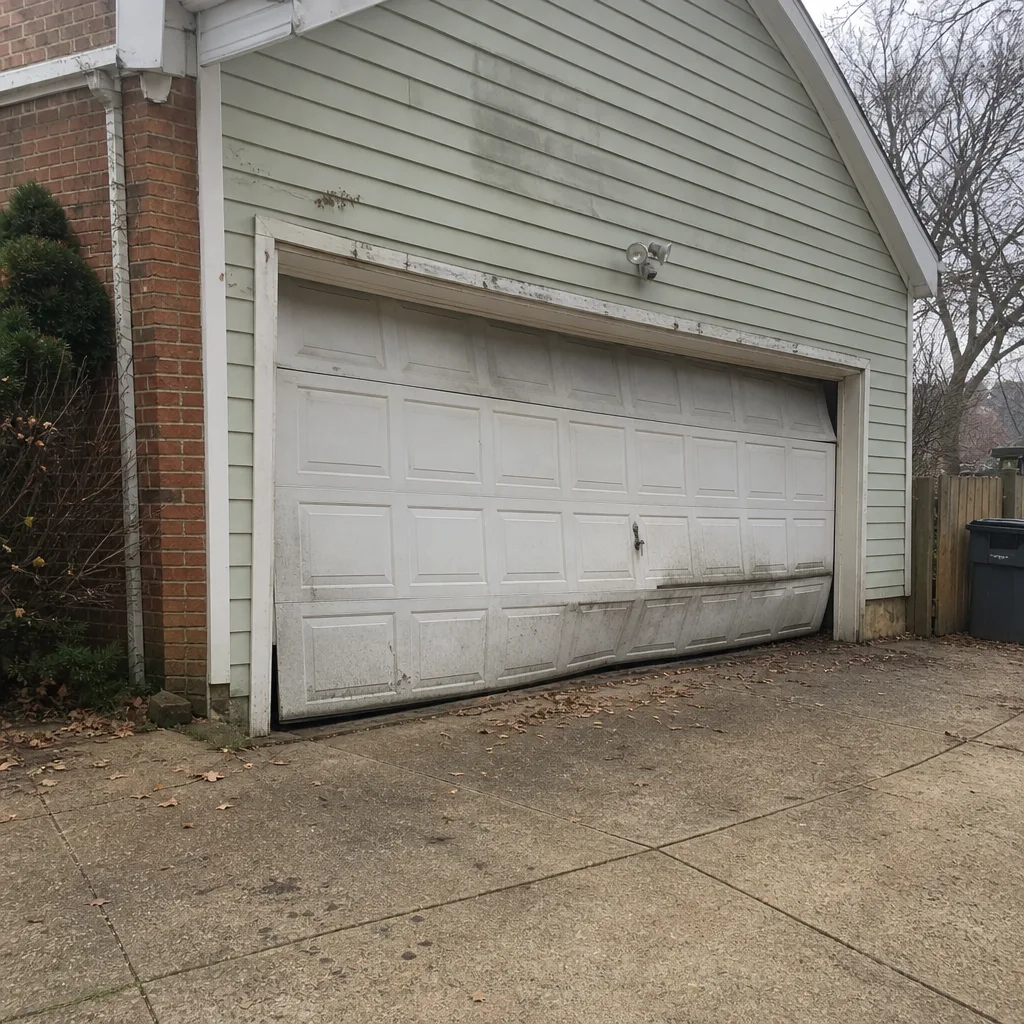 Before
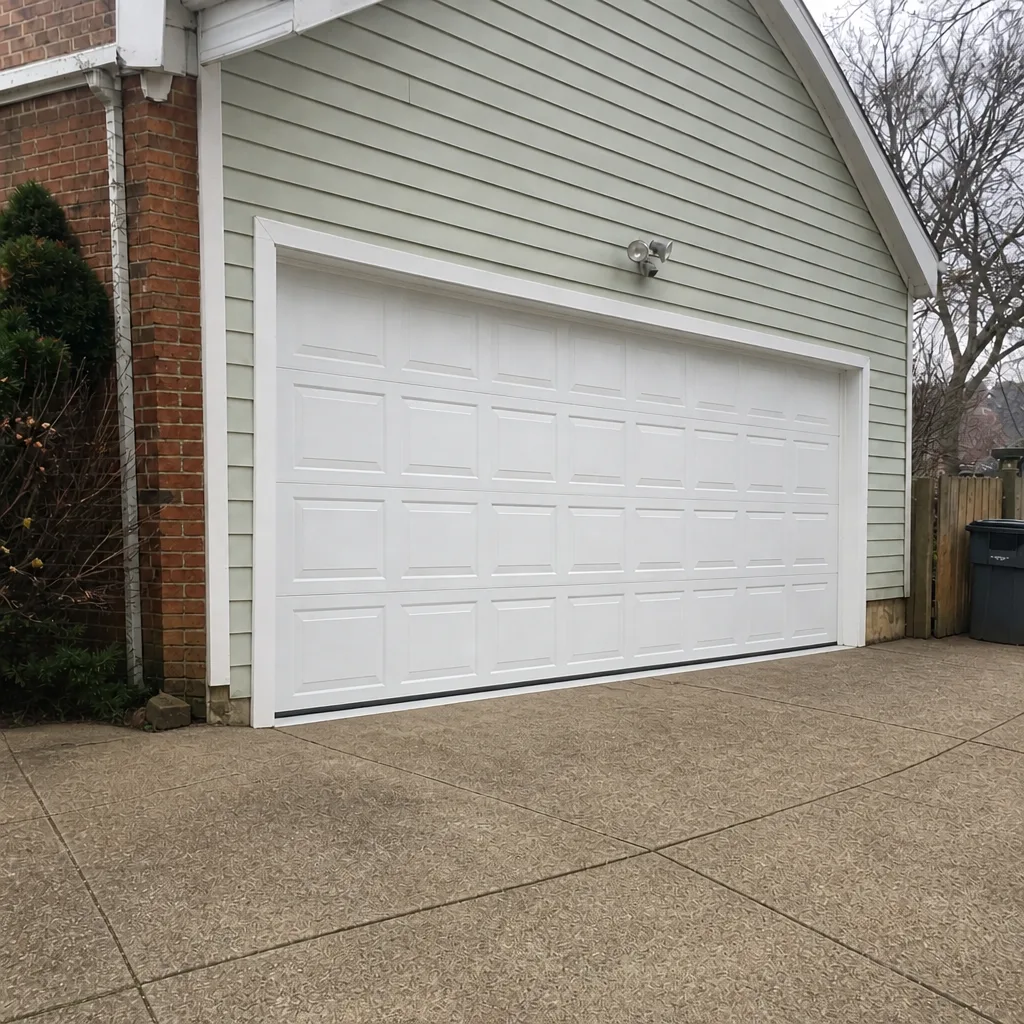 After
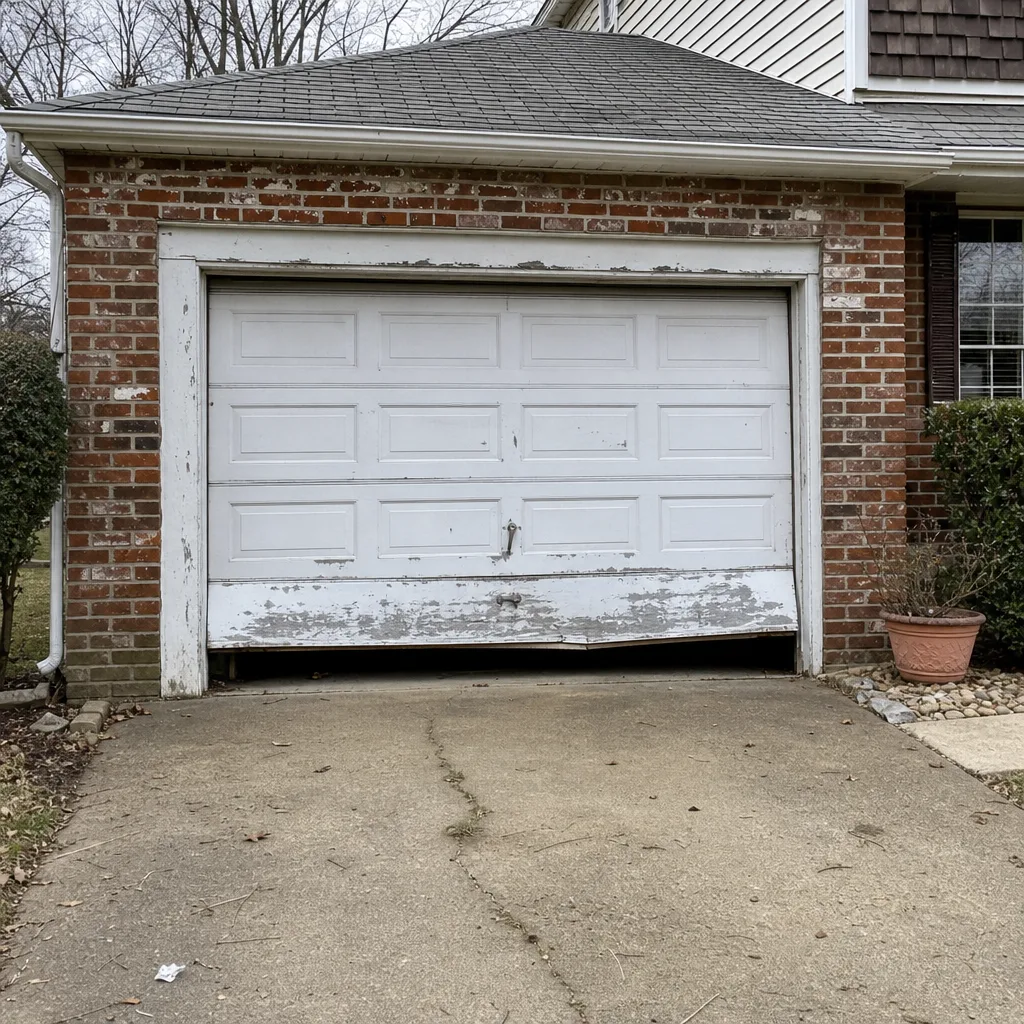 Before
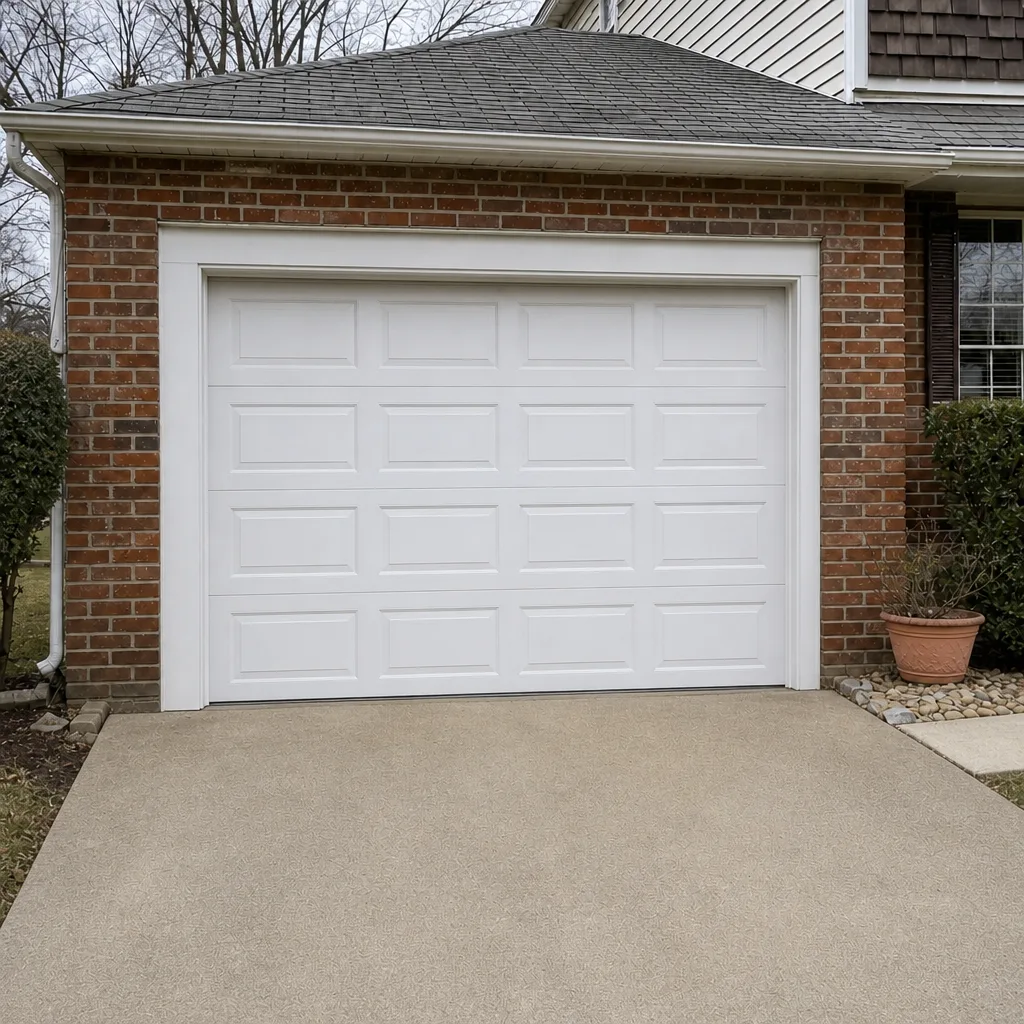 After
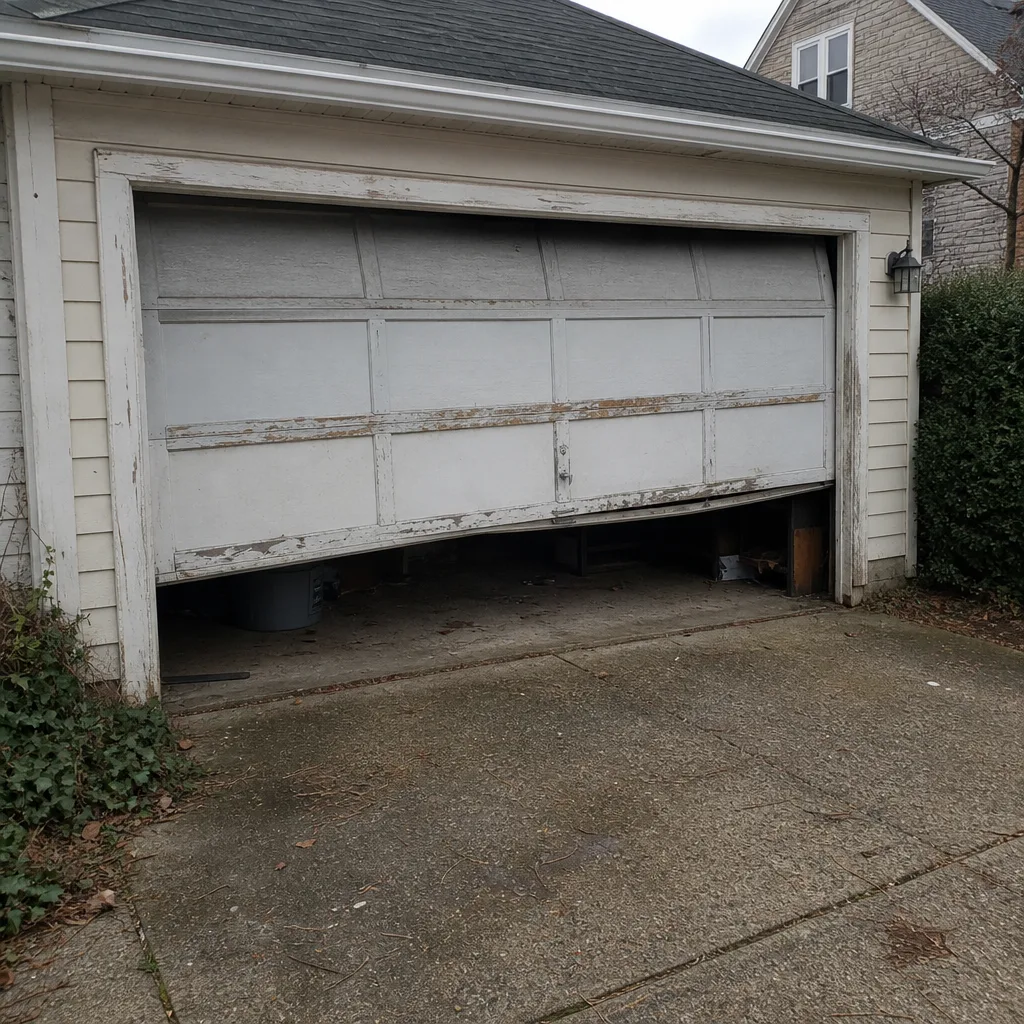 Before
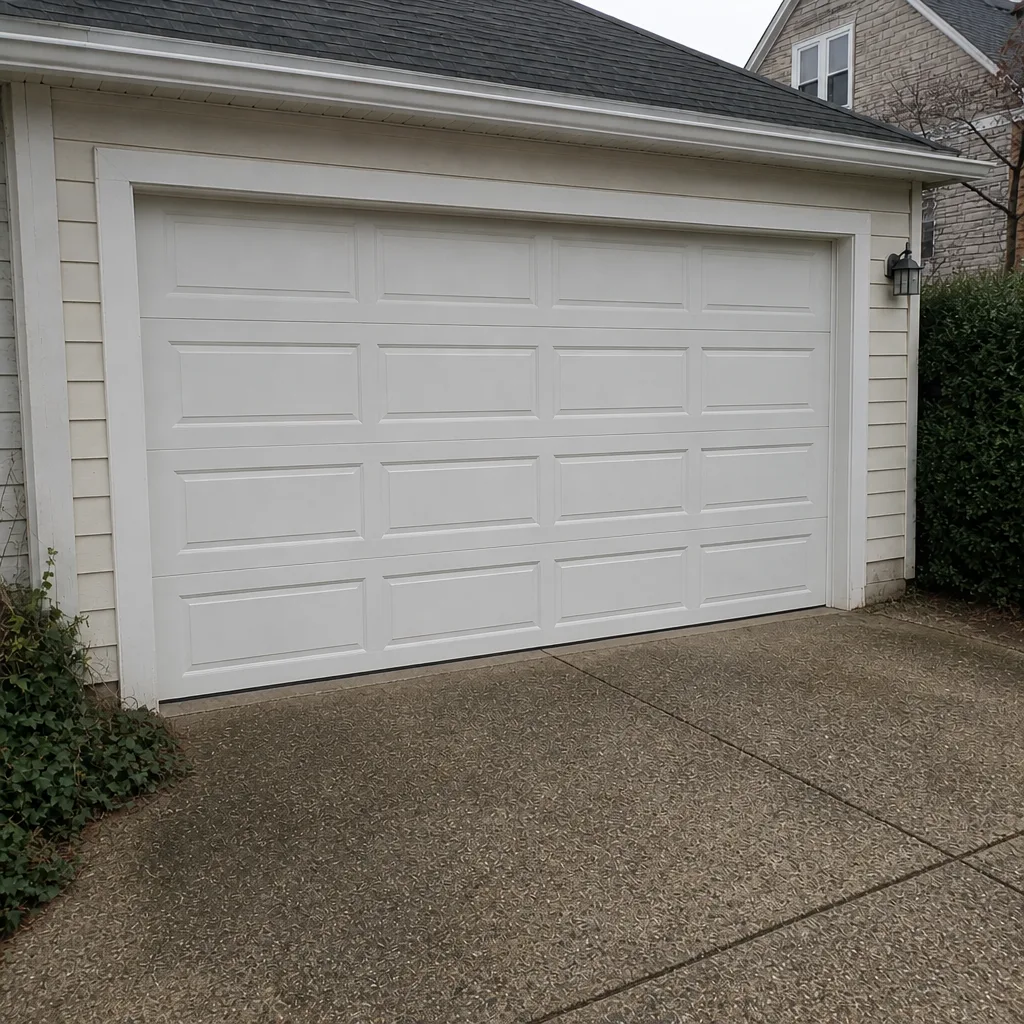 After
When to Call a Professional
Some seasonal maintenance is safe to do yourself. Balance tests, lubrication, seal inspection, and debris clearing are all reasonable homeowner tasks. But certain symptoms require a trained technician with the right tools: any spring that shows a gap, has stretched, or has broken; any frayed or kinked lift cable; a door that has come off the track; an opener that repeatedly fails partway through travel on hot days after the balance test passes; and any panel or structural damage that affects how the door seats against the seal. Cold-weather failures in February and humidity-driven failures in August are the two times when these symptoms most often show up in Alexandria. Garage Door Repair Alexandria Pros offers free estimates in Alexandria, and our technicians have up to 14 years of experience with the hardware in your garage. Call (833) 508-9704.
Frequently Asked Questions
The best time is late February and again in August, because those are the two windows when Alexandria’s climate stresses the door most. Late February maintenance catches freeze-thaw damage before it surfaces later in the spring, and August maintenance catches heat and humidity problems before they turn into falls failures. Fall prep in October and November is also worth the effort, but the two window inspections are the priority. Call (833) 508-9704 for a free estimate.
A torsion spring is nearing failure if you can see a gap in the coil or if the spring looks stretched compared to its original shape. You may also notice a door that feels unusually heavy when lifted by hand or a loud snap followed by the door refusing to open. Springs are under extreme tension and should never be adjusted or replaced by a homeowner. If you see any of these signs, call (833) 508-9704 for a free estimate and a technician with the right winding tools.
Hot-day failures usually trace to one of three causes: thermal expansion causing the tracks to bind, the opener motor overheating in a non-conditioned Alexandria garage and triggering its thermal protection, or UV degradation of the seals creating enough friction to overload the opener. The right diagnosis depends on whether the door also struggles when disconnected from the opener. A balance test tells you a lot in five minutes. If it fails repeatedly, call (833) 508-9704 for a free estimate.
The right seal depends on the door’s bottom profile and the floor gap. Doors with a T-slot in the bottom take a single-T or dual-T seal, while older doors with larger or uneven gaps need a bulb or U-shaped profile. Newer Clopay and Amarr steel doors often take a snap-on style. Measure the gap at its widest point before choosing, and call (833) 508-9704 for a free estimate if you’re unsure which profile your door uses.
Yes, though indirectly. Leaves collect in the gap between the top seal and the header, holding moisture against the seal through the winter. In a freeze-thaw climate like Alexandria’s, that trapped moisture is what cracks the seal, and a cracked seal lets cold air, water, and pests into the garage. The cleanup takes a few minutes and prevents a repair you’d otherwise be making in February. Call (833) 508-9704 for a free estimate if the seal is already damaged.
Yes, and this is the most underrated problem in Alexandria’s climate. Repeated freeze-thaw cycles fatigue the torsion springs, crack the weather seals, and cause wood or composite panels to swell at the edges. The visible failure often appears sudden, but the damage has been accumulating through the whole cycling period. The February inspection is specifically designed to catch it before it becomes a bigger repair. Call (833) 508-9704 for a free estimate.
The Bottom Line
Alexandria’s garage doors don’t fail evenly through the year. They fail in a concentrated window in late February, when repeated freeze-thaw cycling fatigues springs and cracks seals, and again in August, when heat and humidity stress the opener and degrade the bottom seal under UV. A maintenance plan built around those two windows, plus a serious fall prep targeting the tree canopy debris and moisture intrusion, handles most of what a typical Alexandria door will face. The point of this year-round care isn’t a long task list. It’s timing the few tasks that matter to the two moments the climate is working against you. Call (833) 508-9704 for a free estimate. We answer 24/7. Fast dispatch from 7am to 7pm, Sunday through Friday.
Written by the team at Garage Door Repair Alexandria Pros.